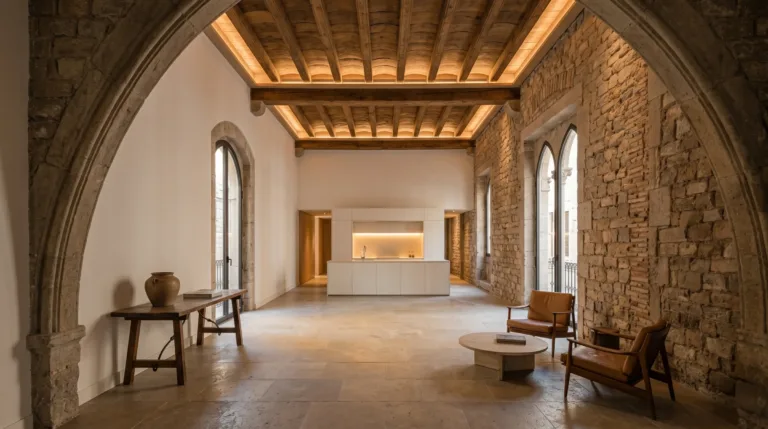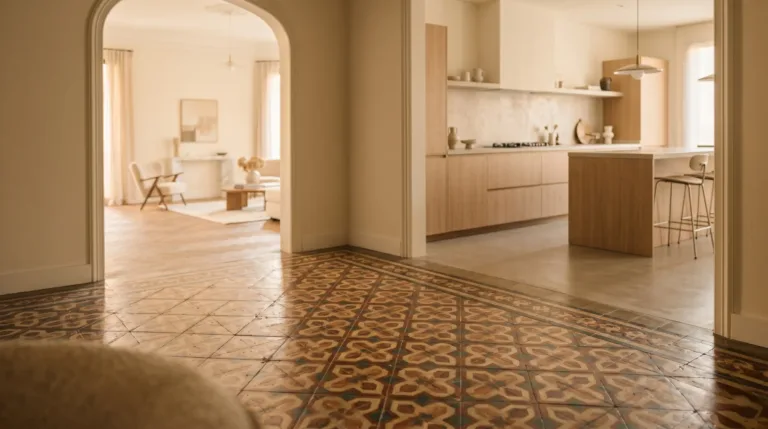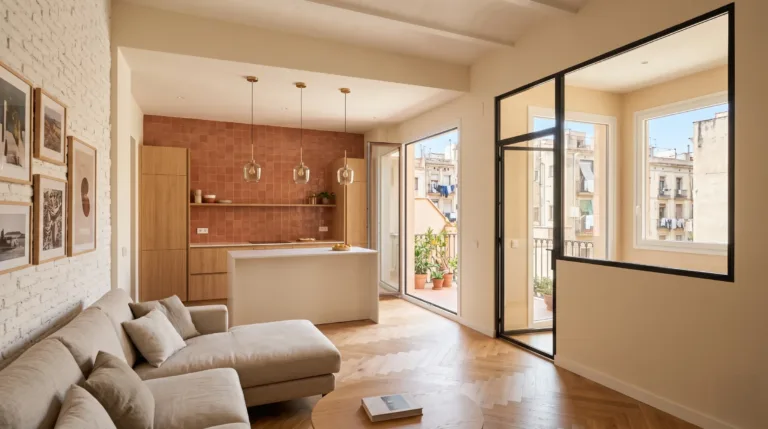
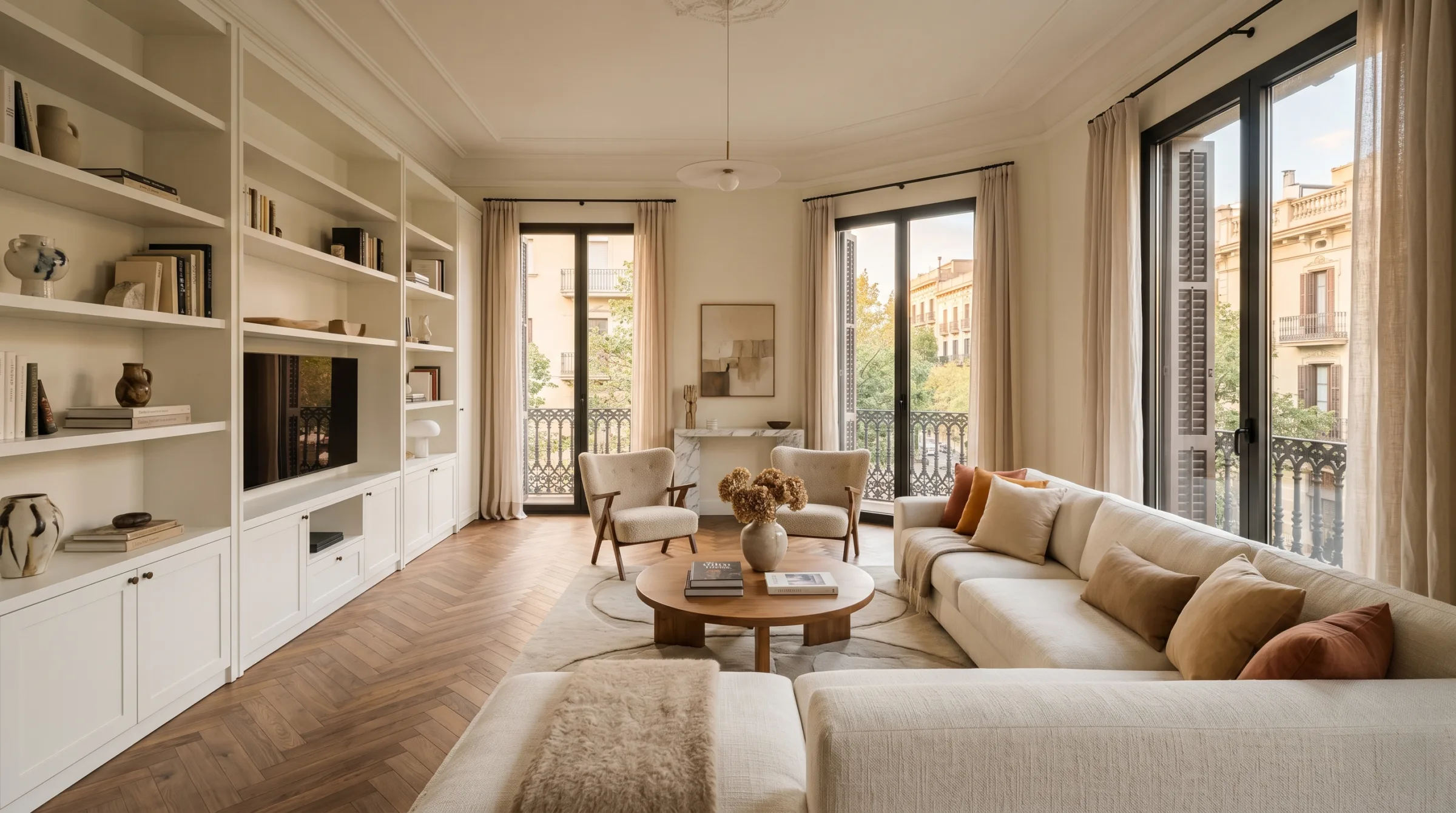
Sarrià-Sant Gervasi is Barcelona’s most affluent residential district — and one of its most architecturally diverse. Unlike the Eixample, where building typology is relatively uniform, this upper district spans everything from early twentieth-century apartment blocks along Carrer de Balmes to detached family villas in the quieter streets of Sarrià itself. Renovating here requires an understanding of that variety, because the challenges, costs, and buyer expectations differ significantly depending on where within the district your property sits.
What makes Sarrià-Sant Gervasi different
The district is not defined by a single architectural period or style. Sant Gervasi — the lower, denser part of the district stretching up from Gràcia toward the hills — contains a mix of late nineteenth and early twentieth century residential buildings, many with original features similar to those found in the Eixample but with more irregular layouts and smaller building footprints. Sarrià proper, historically a separate municipality absorbed into Barcelona in 1921, retains a village character with narrow streets, older masonry structures, and a significant number of detached and semi-detached properties with gardens.
This variety means that before planning any renovation, the first step is understanding exactly what type of building you are dealing with and what level of heritage protection, if any, applies to it.
Heritage protection in Sarrià-Sant Gervasi
The district has fewer catalogued buildings than the Eixample or Ciutat Vella, but protection levels are not uniform. Several streets in Sarrià contain buildings with Level B or C protection, particularly older masonry structures and properties with notable façades. Villa-type properties in the upper residential areas may also be subject to volumetric restrictions that affect extensions, roof modifications, and changes to exterior appearance.
Before commissioning a technical project, check the building’s heritage status in the Barcelona urban planning register (catàleg del patrimoni). In protected buildings, works affecting façades, original structural elements, or exterior volumes will require Heritage Department review alongside the standard permit process, adding time and documentation requirements.
For apartment buildings without specific heritage listing, the permit process follows standard Barcelona rules based on scope of works.
Typical renovation challenges in this district
Building typology variation
In Sant Gervasi apartment buildings from the early twentieth century, construction systems often combine load-bearing brick walls with timber or steel beam floor structures. These buildings predate the reinforced concrete construction common in later decades, which means structural interventions require careful technical assessment. Removing walls that appear to be partitions can reveal unexpected load-bearing functions.
In Sarrià villa properties, renovation challenges tend to centre on outdated services infrastructure — water supply lines, drainage systems, and electrical installations that have been partially updated over decades without full replacement — and on the complexity of integrating modern heating, cooling, and insulation standards into buildings with thick stone or brick perimeter walls.
Access and logistics
Many buildings in the upper parts of the district have no lift or limited lift capacity, and street access for construction vehicles can be restricted on narrower residential streets. This affects material delivery logistics and waste removal, both of which need to be planned carefully to avoid disruption to neighbours and to comply with municipal construction site requirements.
Expectations around finish quality
The buyer and tenant profile in Sarrià-Sant Gervasi is distinctly different from other Barcelona districts. This is primarily a family market, and buyers here prioritise spatial functionality, storage, outdoor space where available, and build quality over visual statement. They are experienced property buyers, often coming from other premium European markets, and they scrutinise technical execution closely. A renovation that looks beautiful but has poor acoustic insulation, inadequate storage, or unresolved HVAC will underperform at resale despite high spend on finishes.
What renovation adds value in this district
Space optimisation for family use. Adding a bedroom or improving the separation between living and sleeping areas consistently performs well. En-suite bathrooms to master bedrooms, dedicated home office spaces, and generous kitchen-dining layouts aligned with family living patterns are the interventions that resonate most with the buyer profile.
Full technical renewal. Buyers in this segment are not prepared to negotiate price down for ageing installations. Full electrical replacement to current standards, updated plumbing, and properly installed HVAC — ideally a ducted fan coil system for year-round climate control — are baseline expectations in properties above €800,000. Skimping here creates problems at survey and in the negotiation phase.
Outdoor space where available. If the property has a terrace, garden, or roof access, integrating that space into the renovation scope adds disproportionate value. Even a small well-designed terrace, properly waterproofed, with considered outdoor lighting and planting, elevates the entire property perception.
Quality of finishes, calibrated to the market. This is a premium segment, but it is not the market for maximalist design. Large-format natural stone tiles, custom joinery with quiet hardware, engineered oak flooring, and neutral paint palettes consistently outperform bold design choices. The renovation should feel enduring, not fashionable.
What rarely adds proportional value
Ultra-luxury finishes applied to properties in the lower price ranges of the district tend to overshoot the market ceiling. A €500,000 apartment in the denser Sant Gervasi zone does not benefit from the same specification as a €1.2 million property in upper Sarrià — the buyer pool and price ceiling are different. Calibrating finish quality to the specific property and location within the district is essential for margin control.
Permit requirements
Permit classification follows standard Barcelona rules:
- Cosmetic works (painting, flooring, kitchen and bathroom replacement without moving service points): Assabentat d’Obres — no architectural project required
- Layout changes without structural intervention: Comunicat d’Obres — requires a technical project signed by a licensed architect or technical architect
- Structural works, façade modifications, roof interventions, or changes to a heritage-listed building: Llicència d’Obres Majors — full architectural project required, approval timeline typically 3 to 6+ months
For villa properties, any extension, volumetric change, or modification to the building envelope will require a Major Works permit and, depending on the building’s cataloguing status, additional Heritage review.
Typical renovation costs
Renovation costs in Sarrià-Sant Gervasi generally sit at the higher end of Barcelona’s range, reflecting finish expectations, access complexity, and the technical demands of older building stock:
- Standard renovation without structural works: €1,300 – €1,700 per m²
- High-quality renovation with structural works or villa-type property: €1,800 – €2,800+ per m²
Budget a 10 to 15% contingency on top of these figures, particularly in buildings that have not been fully renovated in recent decades. Hidden conditions in older structures are common and only fully visible once works begin.
Timeline expectations
A full renovation in Sarrià-Sant Gervasi typically follows this sequence:
- 2 to 4 weeks for initial site assessment and scope definition
- 3 to 6 weeks for design, technical documentation, and material specifications
- 1 to 6 months for permit approval, depending on works classification and heritage status
- 3 to 6 months for construction
Total elapsed time from initial consultation to handover commonly runs 9 to 15 months for projects requiring Major Works permits. Planning this timeline from the outset, rather than working backwards from a desired move-in date, prevents the most common source of stress in this type of project.
Practical advice for property owners
- Commission a structural assessment before finalising your layout plan, particularly in older Sant Gervasi buildings where wall functions are not always obvious from inspection alone
- Confirm heritage status before designing any works affecting the exterior or original interior elements
- Prioritise full technical renewal over cosmetic upgrades — the buyer profile will notice the difference at survey
- Plan logistics carefully if your building has restricted access or no goods lift
- Work with a renovation team that has direct experience in the district’s mix of building typologies
Conclusion
Sarrià-Sant Gervasi rewards renovation investment when the project is correctly calibrated to its market. The buyers and tenants here are discerning, technically literate, and looking for properties that function well for family life over the long term. A renovation designed around those expectations — functional, well-built, quietly premium — consistently outperforms one designed around visual impact alone.