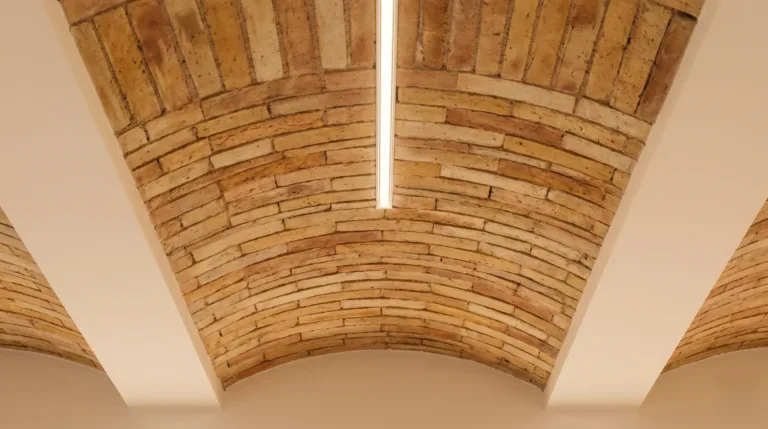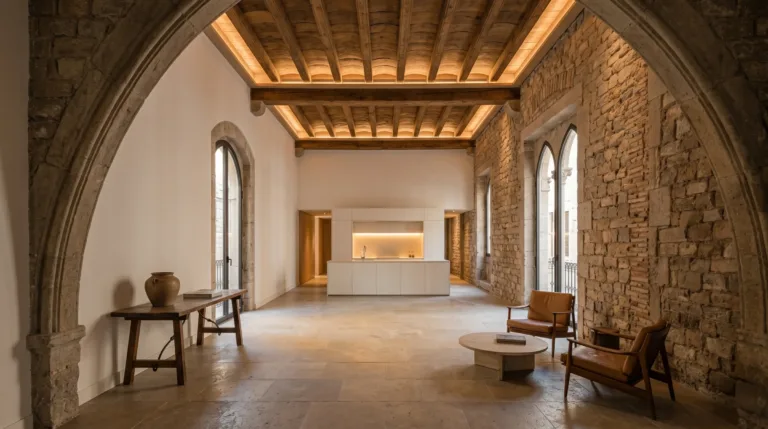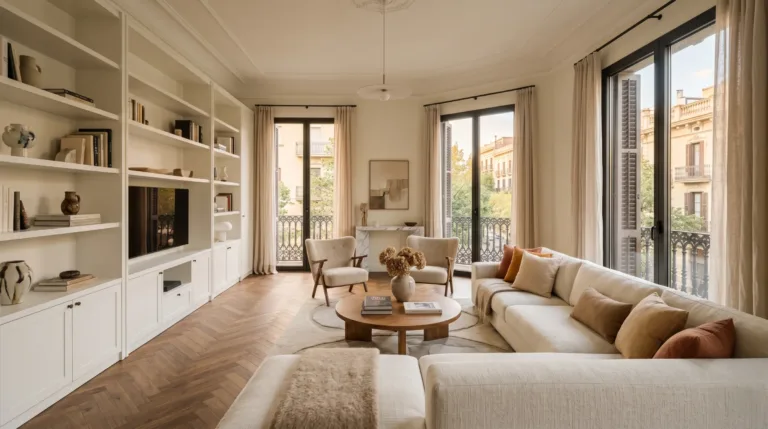
Gràcia occupies a particular place in Barcelona’s residential market. It has the density and street grid of a city district but retains the social texture of a neighbourhood that spent most of its history as an independent municipality. Its architecture reflects that layered identity: a mix of late nineteenth century residential buildings, early twentieth century infill, and a small number of modernista structures that carry formal heritage protection.
For property owners planning a renovation, Gràcia presents a combination of genuine architectural character and specific technical constraints that require careful handling. The district also has a distinct buyer and tenant profile that directly influences what a renovation should — and should not — prioritise.
What makes Gràcia different
The majority of residential buildings in Gràcia date from between 1880 and 1930. Construction systems vary — some buildings use load-bearing brick walls similar to Eixample structures, while others have timber beam floors, lighter masonry, and irregular layouts that reflect the more incremental, less regulated development of the area before it became part of Barcelona proper.
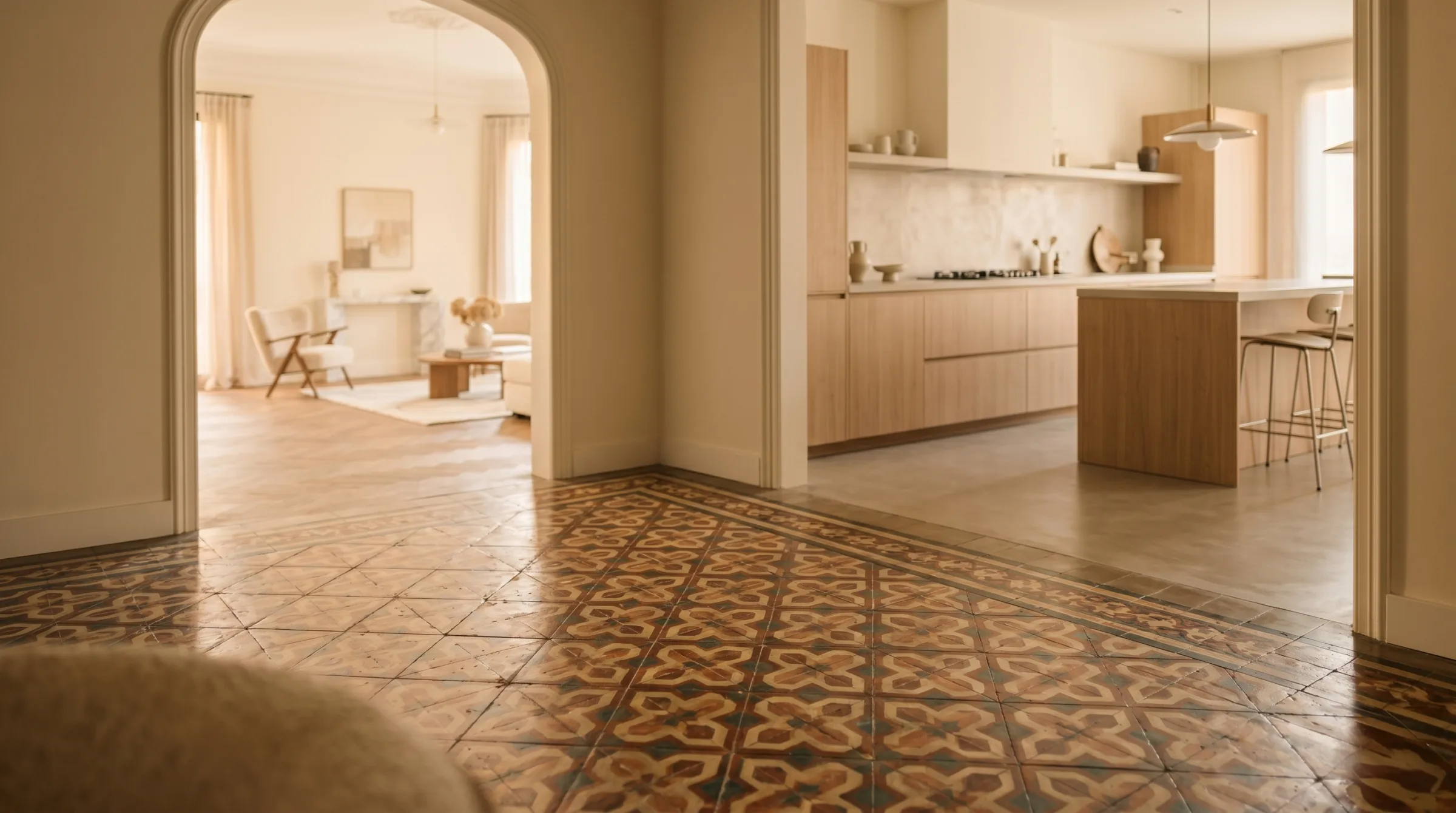
Compared to the Eixample, Gràcia buildings tend to have lower floor-to-ceiling heights, narrower staircases, smaller building footprints, and more irregular apartment configurations. Many contain original features — hydraulic mosaic floor tiles, timber ceilings, original iron balcony railings, and decorative plasterwork — that range from charming assets to structural liabilities depending on their condition.
Heritage protection in Gràcia
Gràcia has a meaningful number of catalogued buildings, concentrated particularly around Carrer Gran de Gràcia, Plaça de la Vila de Gràcia, Carrer Verdi, and the streets around Park Güell. Buildings with Level B, C, or D protection require Heritage Department involvement for any works affecting protected elements, which can include interior structural features, original tile floors, façades, and decorative plasterwork.
Even buildings without formal cataloguing may sit within areas subject to urban planning restrictions that affect how exterior elements — windows, balconies, ventilation openings — can be modified.
The first step before designing any renovation in Gràcia is to check the building’s heritage status and the applicable urban planning rules for the specific street and block.
Typical renovation challenges
Original features: asset or liability
Gràcia’s original hydraulic tile floors are one of the district’s most recognisable features and, when in good condition, represent genuine added value in the current market. However, they require specific restoration skills, are fragile during construction works, and are difficult to match or replace if damaged. Deciding whether to preserve, restore, or replace these elements is one of the first decisions to make in the design phase — and it affects the entire construction sequence.
Original timber beam ceilings, where present, may need structural assessment before other works begin. Partially deteriorated beams are a common discovery in buildings of this age that have not been fully renovated.
Narrow access and small building footprints
Gràcia buildings frequently have staircases too narrow to accommodate standard construction materials and equipment. This increases logistics complexity and cost for material delivery and waste removal. Scaffold installation on narrow streets may require temporary road occupation permits from the municipality, adding both time and cost to the planning phase.
Outdated installations
Like most pre-war Barcelona residential stock, Gràcia apartments commonly have electrical systems that predate current safety standards, galvanized or lead water supply pipes, and drainage systems that require partial or full replacement. In buildings that have been partially modernised over decades, these systems are often a patchwork of different periods and standards, making full replacement more cost-effective than selective upgrading.
Irregular layouts and non-standard dimensions
Gràcia apartments were not built to standardised plans. Room proportions, ceiling heights, and wall thicknesses vary significantly even within the same building. This makes custom carpentry solutions more common than in newer construction and increases the design time required to arrive at a layout plan that works spatially.
What renovation adds value in this district
Preserving and restoring original character elements. Restored hydraulic tile floors, original plasterwork, and timber ceilings — when structurally sound — are consistently among the most valued features for the design-conscious buyers and tenants that Gràcia attracts. A renovation that eliminates these elements in favour of a generic contemporary finish tends to underperform relative to one that integrates them intelligently.
Kitchen and bathroom upgrades. These are the highest-ROI interventions across all price points in the district. Buyers and tenants in Gràcia expect modern, functional kitchens and bathrooms while tolerating — and often preferring — original finishes elsewhere in the apartment. A mid-range integrated kitchen with clean design and quality fixtures consistently outperforms a generic renovation on this measure.
Layout optimisation within constraints. Where building structure permits, improving apartment flow — opening the kitchen to the living area, reducing corridor waste, improving natural light distribution — adds significant perceived value. However, in buildings where structural walls limit layout flexibility, investing in this type of intervention needs careful cost-benefit analysis before committing.
Light. Gràcia apartments on interior-facing courtyard sides can be significantly darker than street-facing units. Anything that improves light distribution — larger internal openings, lighter finishes, considered artificial lighting design — adds disproportionate value in a district where natural light varies considerably between units in the same building.
What rarely adds proportional value
Ultra-premium specifications in mid-range properties overshoot the district’s price ceiling. Gràcia’s buyer profile is design-aware and willing to pay for quality, but the market ceiling is meaningfully lower than Eixample or Sarrià-Sant Gervasi. Investments in imported stone, custom built-in systems, or high-specification HVAC in apartments priced below €500,000 are unlikely to return proportionally at resale.
Permit requirements
Permit classification follows standard Barcelona rules:
- Cosmetic works (painting, flooring replacement, kitchen and bathroom works without moving service points): Assabentat d’Obres — no architectural project required
- Layout modifications without structural works: Comunicat d’Obres — requires a technical project from a licensed architect or technical architect
- Structural interventions, façade changes, or works in heritage-listed buildings: Llicència d’Obres Majors — full architectural project required, approval timelines of 3 to 6+ months
In buildings with heritage cataloguing, even a Comunicat may trigger Heritage Department review, which adds time to the process. This is particularly relevant in the streets around Park Güell and the central squares of the district.
Typical renovation costs
Gràcia sits at the mid-to-upper end of Barcelona’s renovation cost range, with the primary cost drivers being access complexity, heritage feature management, and custom carpentry needs:
- Standard renovation without structural works: €1,100 – €1,500 per m²
- Full renovation with structural works or significant heritage feature restoration: €1,600 – €2,200+ per m²
Add a 10 to 15% contingency for buildings that have not been fully renovated in recent decades. Unexpected structural conditions in pre-war buildings are common.
Timeline expectations
A full Gràcia apartment renovation typically progresses as follows:
- 2 to 4 weeks for initial assessment, including structural review if relevant
- 2 to 5 weeks for design and technical documentation, longer if heritage features require specialist input
- 1 to 5 months for permit approval depending on classification and building cataloguing
- 3 to 5 months for construction
Total elapsed time from first meeting to handover is commonly 8 to 12 months for projects requiring a Major Works permit, and 4 to 6 months for projects within the Comunicat tier.
Practical advice for property owners
- Assess the condition of any original tile floors before the design phase — they affect the entire construction sequence and budget
- Commission a structural assessment if the layout plan involves wall removal, even in walls that appear to be partitions
- Confirm heritage status before designing exterior modifications or interventions affecting catalogued internal elements
- Budget for custom carpentry solutions — irregular Gràcia layouts rarely accommodate standard modular furniture well
- Work with a renovation team familiar with the access and logistics constraints typical of the district’s narrow streets and buildings
Conclusion
Gràcia offers some of the most characterful residential architecture in Barcelona, and renovation projects here have genuine potential to create properties that stand apart in the market. The key is treating the district’s original features as design assets rather than obstacles, calibrating finish quality to the buyer profile, and approaching the regulatory and logistics dimensions with the same care as the design itself.