El Born — formally part of the Sant Pere, Santa Caterina i la Ribera neighbourhood within Ciutat Vella — has become one of the most internationally visible residential addresses in Barcelona. Its concentration of seventeenth and eighteenth century merchant houses, narrow medieval lanes, and proximity to the Parc de la Ciutadella and the waterfront attracts a consistent flow of international buyers. They look for properties with genuine architectural character in a central, walkable location.
Renovation in El Born sits at the intersection of real heritage complexity and strong market demand. The buildings offer extraordinary potential — double-height ceilings, original stone staircases, courtyard structures, historic vaulting. Realising that potential, however, requires navigating a regulatory and structural environment that is significantly more demanding than most other Barcelona districts.
What makes El Born different
The dominant residential building type in El Born is the historic merchant house (casa de la Ribera or casa de comerç), built primarily between the seventeenth and nineteenth centuries. These buildings share several renovation-defining characteristics: generous floor-to-ceiling heights (often 4 to 5 metres on principal floors), load-bearing stone or early brick perimeter walls, original internal courtyard structures, vaulted ground floor spaces, and elaborate original staircases that frequently carry heritage protection.
The neighbourhood also contains a significant amount of nineteenth century infill on smaller street plots, and a number of twentieth century additions that modified or replaced earlier structures. Understanding which category your specific building belongs to — and what that means for structural behaviour, heritage protection, and renovation scope — is the essential first step before any other planning begins.
Heritage protection in El Born
El Born has a high density of individually catalogued buildings. These concentrate particularly around Carrer del Rec, Carrer del Comerç, Carrer dels Flassaders, and the blocks adjacent to the Basílica de Santa Maria del Mar. Level B and Level C protected buildings appear throughout the neighbourhood.
The Basílica de Santa Maria del Mar and its immediate surroundings carry an additional visual protection layer. This restricts exterior modifications to buildings within the affected sightline zone. Façade interventions, window changes, and rooftop additions anywhere within view of the basilica require careful pre-design review.
Heritage protection in El Born frequently covers internal elements that other districts leave unprotected. Original courtyard structures, vaulted ground-floor spaces, historic staircases with wrought iron or stone detailing, and carved stone façade elements all fall within the scope of protection in many buildings. Before any design work begins, owners need a specific heritage review of the building. This identifies exactly which elements carry protected status and what obligations that creates for the renovation programme.
Structural complexity in merchant house buildings
The merchant houses of El Born were not built as apartment buildings. Most functioned originally as single-family or commercial-residential structures. Subsequent division into individual apartments happened at various points in the nineteenth and twentieth centuries — often without structural rigour.
The division process frequently involved partial removal of load-bearing walls, the addition of floors within existing voids, and retrofitted service infrastructure without proper design oversight. Understanding the original structural logic of these buildings — and the subsequent modifications layered over it — requires specialist structural assessment before owners design any layout changes. What a current floor plan shows may bear little relationship to the original construction. The cumulative effect of multiple historical modifications can create structural conditions that visual inspection alone will not reveal.
Working with double-height spaces
The generous ceiling heights that make El Born apartments commercially attractive also create renovation complexity. Electrical routing, HVAC installation, and plasterwork at height require specialist access equipment. This increases both cost and programme duration relative to standard-height spaces.
Where original ornamental plasterwork appears on high ceilings, construction teams must protect it carefully throughout the works. Damage to protected decorative elements creates both legal obligations and significant remediation costs. Build protective measures into the construction programme from the outset, not as an afterthought once works begin.
Courtyard structures and access logistics
Many El Born merchant houses retain their original internal courtyard (pati interior). This is frequently a protected element. Works affecting courtyard structures, ground-floor vaulting that opens onto the courtyard, or the visual relationship between apartments and the shared courtyard space all require Heritage Department approval. Teams must integrate these requirements into the technical project from the outset.
El Born’s streets are narrow. Many sections are partially pedestrianised. Vehicular access restrictions affect large portions of the neighbourhood. Material delivery and demolition waste removal require careful logistics planning, often involving coordination with the Districte de Ciutat Vella for access exemptions and temporary occupation permits. Buildings with original stone staircases — which frequently carry heritage protection and cannot withstand heavy construction traffic — may require external lifting solutions for large items.
What renovation adds value in El Born
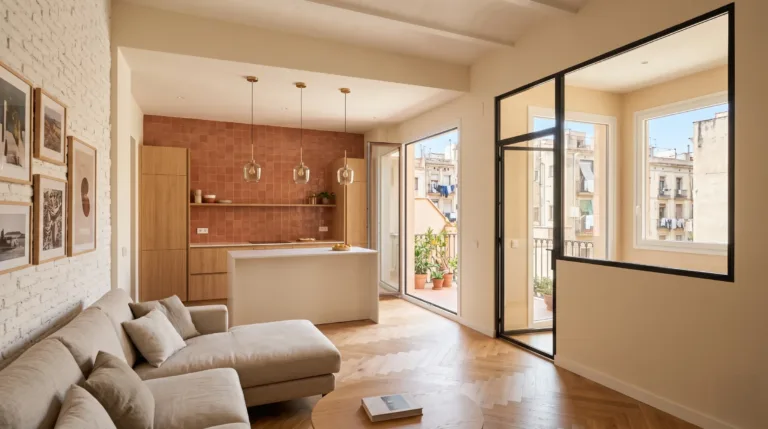
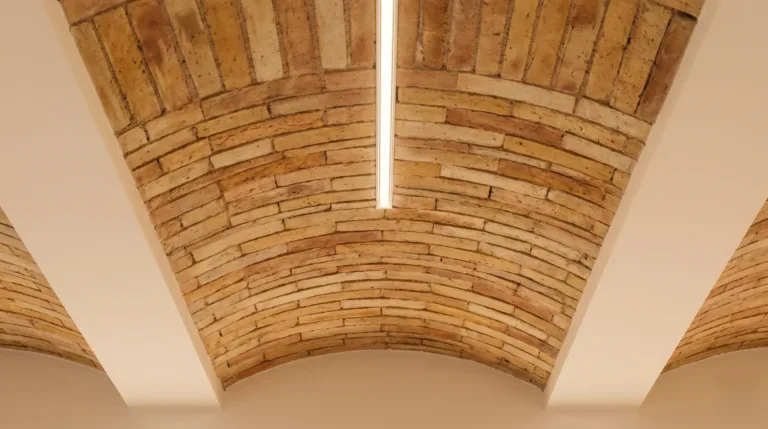
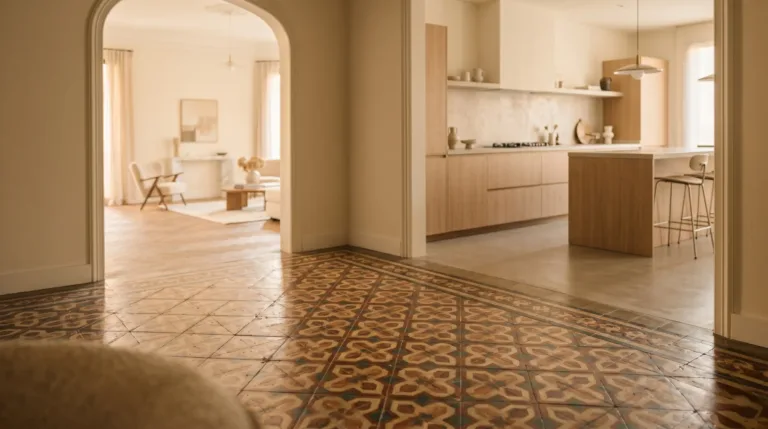
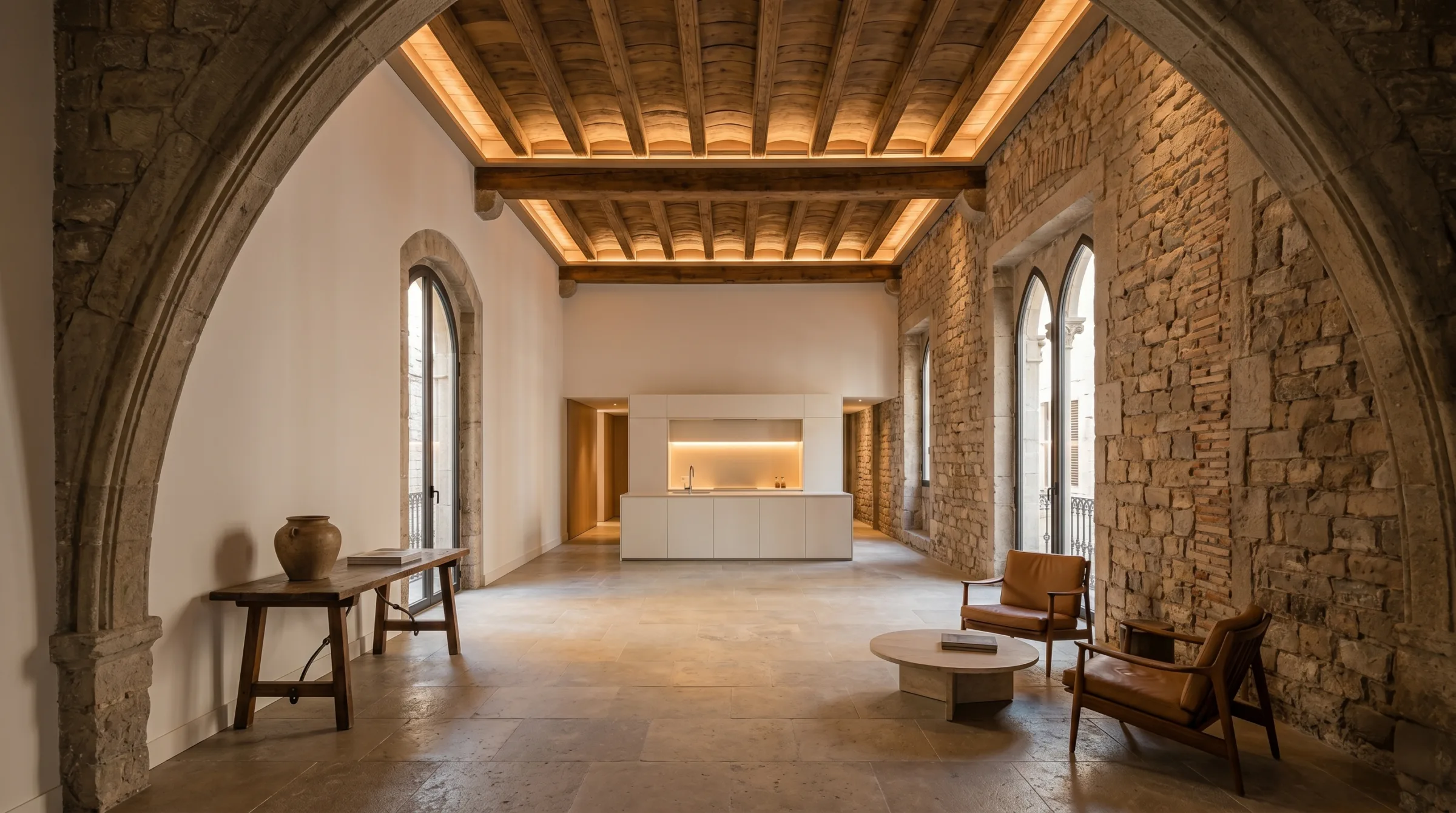
Exposing original structure. This is the intervention that most consistently produces premium results in El Born. Exposed stone walls, original vaulted ceilings, timber beams, historic tile floors, and original wrought iron details — integrated with contemporary lighting, high-quality materials, and bespoke joinery — create the residential aesthetic that the neighbourhood’s international buyer profile specifically seeks. Buyers who choose El Born choose the architecture. A renovation that amplifies rather than conceals it commands the strongest premiums in the market.
Double-height principal rooms. Where the original building configuration permits and heritage constraints allow, maintaining or recovering double-height spaces in principal living areas creates spatial quality that standard residential construction cannot replicate. This is one of the most commercially powerful features a renovation can deliver in this district.
Integration of outdoor space. Terrace access, restored courtyard connections, and well-designed exterior spaces — where achievable within heritage constraints — add significant value. El Born buyers frequently come from northern European markets with strong outdoor living traditions, and they weigh these features heavily in purchase decisions.
Full technical renewal to premium standards. The international buyer market in El Born has high expectations for technical infrastructure. Full electrical systems with generous circuit capacity, new plumbing throughout, and climate control — typically via high-wall split systems or fan coil units where ceiling voids are insufficient for ducted solutions — are baseline requirements. Properties that present well visually but fail technical inspection lose significant value during negotiation.
What rarely pays off
Renovations that homogenise the space consistently underperform in El Born. Buyers here specifically value the architectural distinctiveness of the building. A renovation designed to feel contemporary but anonymous — smooth white surfaces, no original detail, standard finishes — competes poorly against one that engages with the building’s character. The premium in this district is architectural. Neutralising it through renovation is commercially counterproductive.
Over-investment in extremely premium specifications also requires caution in smaller or secondary-street properties. The market ceiling in El Born, while high, is not uniform across the neighbourhood. The building quality, floor level, street, and natural light levels all affect the achievable exit price, and specification levels should calibrate to that.
Permit requirements
Permit classification nominally follows standard Barcelona rules. In practice, Heritage Department involvement is standard rather than exceptional in El Born:
- Cosmetic works in non-protected buildings: Assabentat d’Obres — rarely applicable given the district’s cataloguing coverage
- Layout modifications without structural works: Comunicat d’Obres, but Heritage review applies in most catalogued buildings, extending timelines to 2 to 6 months
- Structural works, façade modifications, courtyard interventions, or any works in a catalogued building: Llicència d’Obres Majors — full architectural project required. Heritage Department review is mandatory. Approval timelines run 6 to 12+ months.
An architect with direct El Born permit experience and an established working relationship with Heritage Department reviewers is strongly advisable. Familiarity with El Born-specific documentation standards and review criteria reduces both approval timelines and the likelihood of revision requests.
Typical renovation costs
El Born sits at the upper end of Barcelona’s renovation cost range. Structural complexity, heritage obligations, logistics constraints, and the specification levels the market expects all drive costs upward:
- Standard renovation in a lower-tier protected or non-protected building: €1,500 – €2,000 per m²
- Full renovation with original fabric restoration in a Level B building: €2,000 – €3,500+ per m²
Set a contingency of 15 to 20% from the start. Merchant house renovations in El Born regularly produce structural or heritage discoveries during demolition that require design adaptation and additional works.
Timeline expectations
Full renovation projects in El Born follow similar elapsed timelines to the Gothic Quarter for Level B building projects, with somewhat shorter timelines for lower-tier protection levels:
- 3 to 5 weeks: initial assessment including structural inspection and heritage review
- 3 to 7 weeks: design and technical documentation
- 4 to 12 months: permit approval depending on works classification and building protection level
- 4 to 7 months: construction
Total elapsed time from initial consultation to handover runs 10 to 18 months for projects in protected buildings. For projects in non-protected buildings with straightforward permit classification, 6 to 9 months is achievable.
Practical advice for property owners
- Commission a heritage review and structural assessment before finalising any design brief
- Identify the protection status of every internal element you intend to modify before the design phase — teams that discover protected elements mid-construction face significant delays
- Set a 15 to 20% contingency from the outset
- Work with an architect who has direct El Born experience, particularly with merchant house structural systems
- Plan logistics carefully — access constraints in El Born carry direct and material budget implications
- Do not commit to fixed completion dates until the Ajuntament confirms the permit
Conclusion
El Born is one of the most rewarding renovation environments in Barcelona when owners approach it with the right preparation. The buildings are extraordinary. The market that seeks them out is international, design-literate, and willing to pay for architectural quality. A renovation that understands and amplifies what makes these buildings exceptional — rather than one that imposes a generic finish over their character — produces properties with long-term value and appeal that few other Barcelona locations can match.