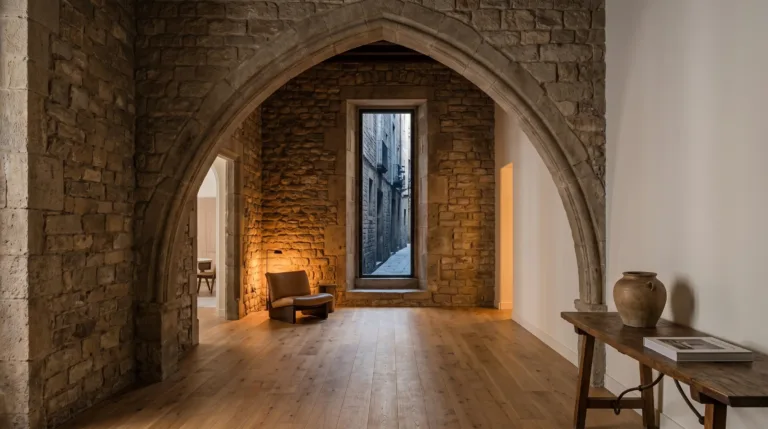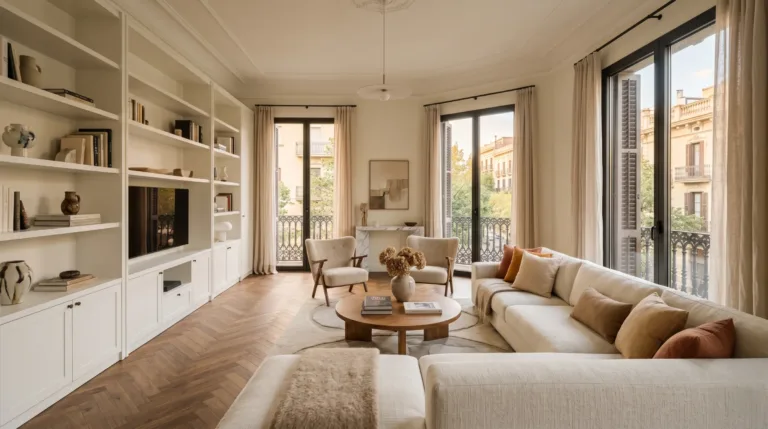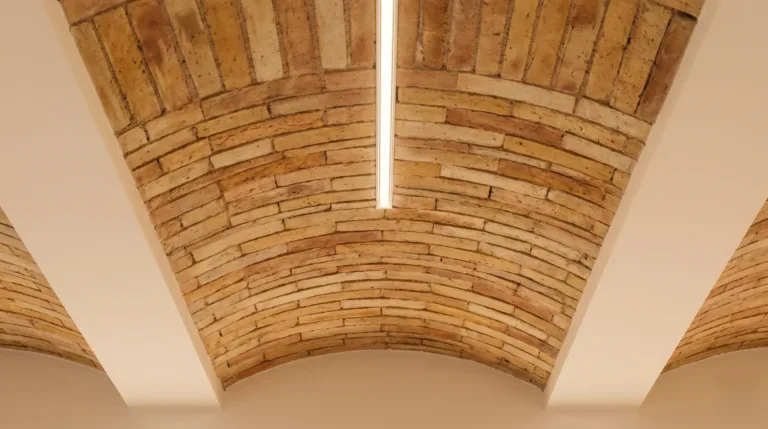
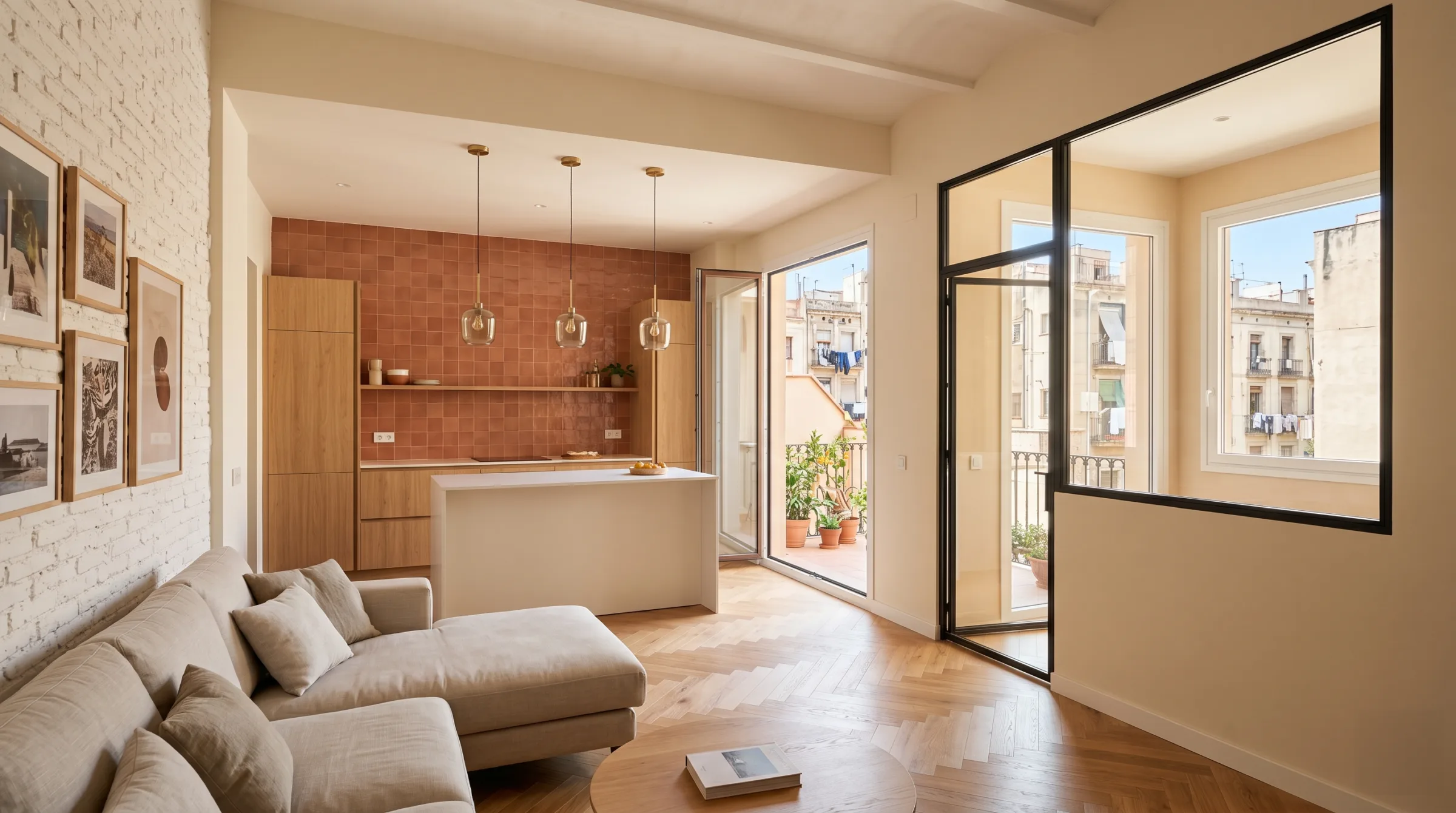
El Raval is the most misunderstood residential district in central Barcelona. For decades, its reputation focused on its challenges. Over the past twenty years, however, the district has undergone a sustained transformation. The MACBA and CCCB cultural institutions reshaped the northern part of the neighbourhood. The ongoing renewal of the southern streets has attracted a growing international residential and creative-professional market.
El Raval today presents a renovation opportunity distinct from the Gothic Quarter or El Born. Entry costs are lower. The building typology is broader. Heritage constraints are lighter across much of the district. The buyer and tenant profile is evolving toward higher quality expectations faster than prices have followed. For owners who understand the district’s specific renovation dynamics, that gap represents genuine commercial opportunity.
What makes El Raval different
El Raval’s residential building stock is primarily nineteenth century. Workers constructed most of it during the rapid urban expansion that followed Barcelona’s industrial revolution. Unlike the Gothic Quarter or El Born, which developed on medieval street patterns, El Raval grew on a denser, more regular grid — though still far narrower and more irregular than the Eixample.
The dominant typology is the working-class or lower-middle-class residential building from the 1850 to 1930 period. These buildings use load-bearing brick construction. Apartment sizes tend to be smaller than in wealthier districts. Service infrastructure has often been partially updated over decades without full replacement.
Raval Nord versus Raval Sud
The northern part of El Raval — Raval Nord, above Carrer de l’Hospital — has seen stronger price appreciation. Its buyer profile now sits closer to El Born than to the traditional Raval image. The southern part — Raval Sud — remains a more mixed neighbourhood with lower prices and a broader range of property quality and condition.
This internal variation makes district-level generalisations less useful than in more homogeneous neighbourhoods. The renovation approach, specification level, and commercial logic differ meaningfully between a property on Carrer dels Àngels, three minutes from the MACBA, and one on Carrer de Sant Pau in the southern zone. Owners must assess their specific micro-location before setting the renovation strategy.
Heritage protection in El Raval
El Raval has fewer individually catalogued buildings than the Gothic Quarter or El Born, but it is not without heritage constraints. Several streets and building clusters carry protection designations, particularly in areas with higher architectural quality or historical significance.
The Hospital de la Santa Creu complex and its surrounding streets carry specific heritage restrictions. The Palau Güell on Carrer Nou de la Rambla sits within an area that has visual protection implications for adjacent properties.
For the majority of El Raval residential buildings — particularly those in mid-range construction from the late nineteenth and early twentieth centuries — heritage restrictions are lighter than in the Gothic Quarter or El Born. Standard Barcelona permit tiers apply more straightforwardly, and Heritage Department involvement is the exception rather than the rule.
That said, a building-specific heritage check before design begins remains essential. The verification costs very little. Discovering mid-project that a protected element is affected costs significantly more.
Building condition: the primary challenge
The primary renovation challenge in El Raval is not heritage complexity — it is building condition. Many apartments have been inadequately maintained or only partially updated over decades. The result is frequently a patchwork of electrical systems from different eras, drainage dating to original construction, water supply pipes in materials that no longer meet current standards, and structural elements that previous owners informally modified without technical oversight.
Full infrastructure replacement — electrical, plumbing, drainage — is standard in any comprehensive El Raval renovation. Owners who budget for partial renewal and then discover additional replacement requirements mid-works face the most common source of cost overruns in the district. Front-load the infrastructure scope from the outset.
Apartment size and layout constraints
El Raval apartments tend to be smaller than equivalent-priced properties in the Eixample or El Born. The buildings were not designed around the spatial standards of wealthier districts. Low ceiling heights appear in some buildings. Room configurations are narrow. Natural light is limited, particularly in interior-facing apartments and those on lower floors.
These constraints require careful design resolution to produce a commercially competitive result. Layout optimisation is often the highest-value renovation intervention in El Raval precisely because many apartments were never well-designed for contemporary residential use. Opening kitchen-living connections, recovering light through internal openings, and improving bedroom configurations can dramatically change the market perception of a property without requiring structural works.
Access, logistics, and community dynamics
El Raval shares the access constraints of Ciutat Vella generally. Many streets are narrow, pedestrian-prioritised, or carry restricted vehicular access. Construction teams must plan logistics in advance. Buildings without lifts — common in the district — create additional handling complexity for materials and waste. These constraints add cost relative to more accessible districts and must enter the budget from day one.
Many El Raval buildings contain apartments with very long tenure under rent protection arrangements. Renovation works in a building with diverse occupancy — particularly structural works or works affecting shared elements — require careful management of community relations. In some cases, the community of owners must formally approve certain interventions. Project teams who ignore this dynamic encounter delays that thorough pre-project engagement would have prevented.
What renovation adds value in El Raval
Layout and light optimisation. This delivers the highest ROI in most El Raval apartments. Opening closed kitchen configurations, recovering light through enlarged internal openings, and redistributing space toward more usable bedroom and living configurations can transform a below-average apartment into a competitive one at relatively modest cost. In smaller apartments where structural works are limited, this type of intervention often produces the strongest return of any renovation scope.
Full technical renewal. The market is maturing. Buyers and tenants targeting El Raval today — particularly in Raval Nord — increasingly apply the same technical due diligence standards as buyers in El Born or the Eixample. Properties with ageing infrastructure face growing pricing pressure against fully renovated competition. Full electrical, plumbing, and climate control renewal is no longer optional for properties targeting the upper end of the local market.
Quality of finishes, calibrated carefully. El Raval rewards quality, but it carries a lower price ceiling than El Born, the Gothic Quarter, or the Eixample. The target finish standard is premium mid-range: durable materials, clean design, properly executed detail — without the luxury specification that characterises top-end El Born projects. Match the specification to the achievable exit price. This is the primary financial discipline in this district.
Outdoor space. Even small terraces or courtyard-facing windows with external access are significant value drivers in El Raval, where outdoor space is genuinely scarce. Any renovation scope that can incorporate or improve outdoor connectivity should prioritise it.
What rarely pays off
Over-specification relative to the local price ceiling consistently erodes margins. Raval Nord is approaching El Born pricing levels for the best properties, but the average price ceiling across the district remains lower. Ultra-premium finishes, luxury kitchen and bathroom specifications, and high-end custom joinery in mid-range properties in the southern or less central parts of the district are unlikely to return at resale. Understand the specific micro-location’s ceiling before setting the specification level.
Structural interventions that do not unlock meaningful functional improvement also rarely produce proportional returns in El Raval. The cost-to-benefit ratio for structural works here — given logistics costs and the lower price ceiling compared to the Gothic Quarter or El Born — requires careful analysis before committing. Layout changes that deliver clear, commercially measurable functional improvement justify the cost. Structural complexity for spatial or aesthetic reasons alone does not.
Permit requirements
For most El Raval renovation projects, standard Barcelona permit tiers apply without Heritage Department complications:
- Cosmetic works (painting, flooring, kitchen and bathroom replacement without moving service points): Assabentat d’Obres — no architectural project required
- Layout modifications without structural works: Comunicat d’Obres — requires a signed technical project. Approval timeline: 1 to 2 months.
- Structural works or works in any catalogued building: Llicència d’Obres Majors — full architectural project required. Approval timeline: 3 to 6+ months. Heritage review applies only to catalogued buildings.
For the majority of mid-range El Raval residential buildings, the Comunicat process is more straightforward than in the Gothic Quarter or El Born. Less regulatory friction on most project types translates directly to shorter pre-construction timelines and lower professional fees. This is one of the practical commercial advantages of renovating in this district.
Typical renovation costs
El Raval sits at the lower-to-mid range of Barcelona renovation costs. The primary cost variables are building condition, logistics complexity, and specification level:
- Standard renovation without structural works: €900 – €1,400 per m²
- Full renovation with structural works or comprehensive infrastructure renewal: €1,400 – €2,000 per m²
Set a 10 to 15% contingency. While El Raval does not carry the archaeological risk of the Gothic Quarter or the structural complexity of El Born merchant houses, infrastructure discoveries mid-works are common in buildings that workers have not comprehensively renovated in recent decades.
Timeline expectations
El Raval renovation projects benefit from lighter heritage constraints on most building types. Elapsed timelines are shorter than the Gothic Quarter or El Born for projects in non-catalogued buildings:
- 2 to 3 weeks: initial assessment
- 2 to 4 weeks: design and technical documentation
- 1 to 3 months: Comunicat permit approval; 3 to 6+ months for Obres Majors
- 3 to 5 months: construction
Total elapsed time from initial consultation to handover commonly runs 6 to 10 months for Comunicat-tier projects, and 9 to 14 months for projects requiring a Major Works permit.
Practical advice for property owners
- Conduct a building condition survey before finalising the budget — infrastructure replacement scope is the most variable cost element in El Raval projects
- Confirm the building’s heritage status early, even if you expect it to be uncatalogued
- Set specification levels with the specific micro-location’s price ceiling in mind — Raval Nord and Raval Sud are meaningfully different markets
- Prioritise layout and light optimisation before specifying finishes — in smaller apartments, spatial quality returns more at resale than material quality does
- Engage the community of owners early if works affect shared elements
- Budget for access constraints specific to the district’s street pattern
Conclusion
El Raval is at a point in its evolution where well-executed renovation projects can capture meaningful value ahead of continued market appreciation. Entry costs remain lower than adjacent Gothic Quarter and El Born properties. Heritage constraints are lighter for most building types. The gap between the best renovated properties and the average unrenovated stock remains wide. Owners who renovate to a genuine standard — technically complete, spatially well-resolved, and calibrated to the district’s maturing buyer expectations — are well positioned in a market that continues to move in their direction.