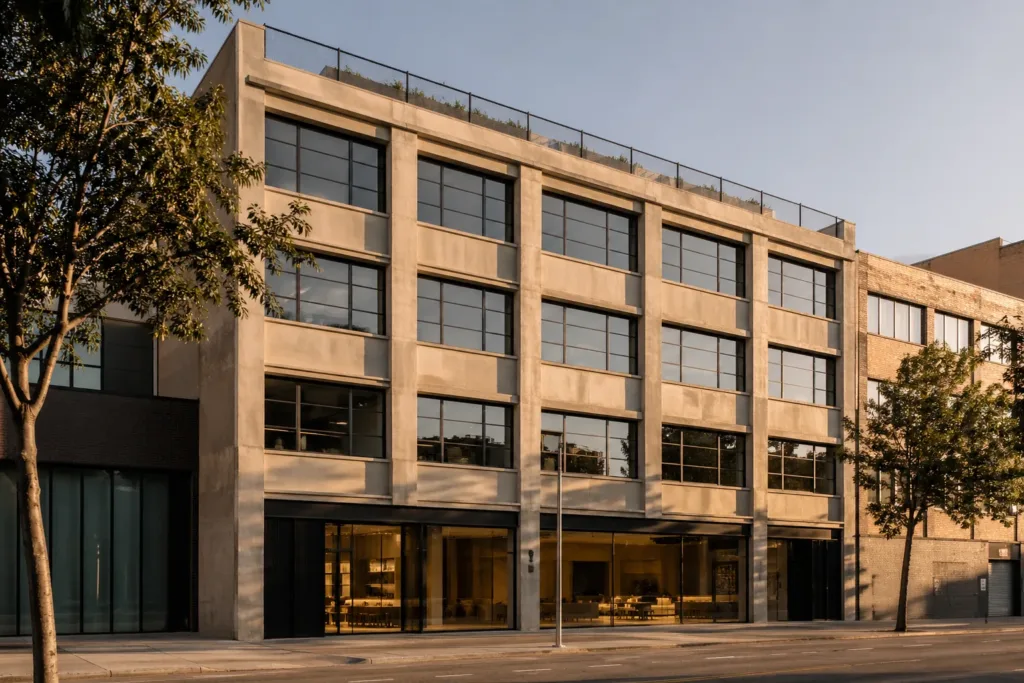
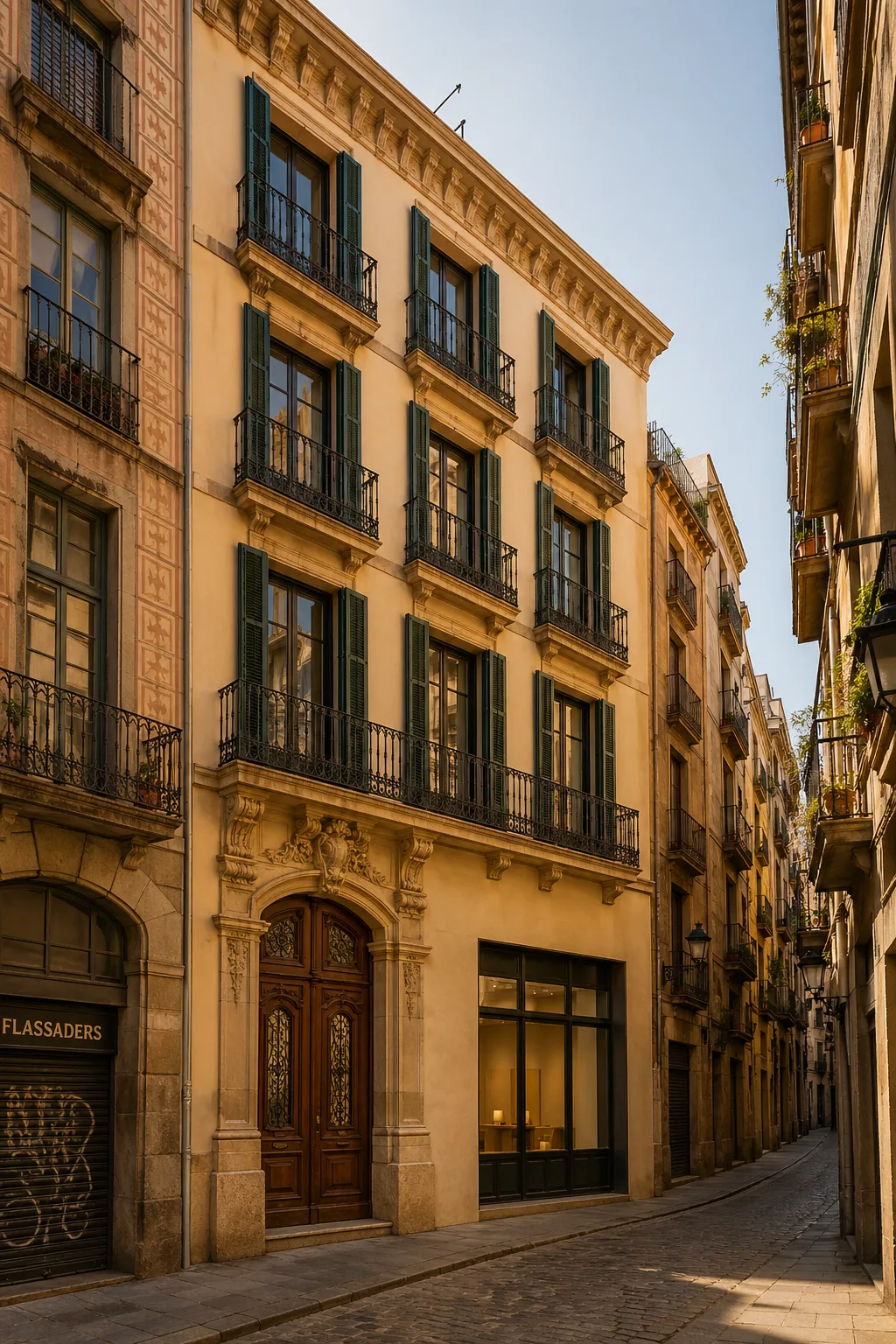
This building renovation in El Born, Barcelona restored a 680 m² 19th-century residential property near Carrer dels Flassaders to its full architectural potential. Built circa 1875, the building rises across five floors with six residential apartments and a ground-floor commercial unit opening directly onto one of El Born’s most characterful streets. When acquired, the building had been through multiple layered interventions over the decades. Its original structure was intact. Its original character had been almost entirely buried.
The project combined structural consolidation, heritage restoration, and high-end residential fit-out across all levels. It required close coordination with the Ajuntament de Barcelona’s technical services under a full Llicència d’Obres Majors and involved a restoration architect working alongside Lirian’s project management team throughout the entire process.
Building History and Condition
The building was originally designed as a middle-class residential property typical of the Ribera neighbourhood in the late 19th century. It retains its original load-bearing stone party walls, a central light well, an ornate entrance portal, and a stone staircase with wrought-iron balustrade. A series of ceiling vaults survive on the first floor. The hydraulic mosaic tile flooring in the common areas was largely intact beneath later vinyl coverings.
Before the renovation began, a full structural survey was commissioned. The survey confirmed the integrity of the original masonry but identified critical deterioration in the intermediate timber floor structures of two upper apartments. These were fully replaced using steel beams and concrete composite decking, maintaining the original floor levels throughout.
Structural and Systems Upgrade
The full renovation involved replacement of all building systems from ground level. New concealed plumbing risers were installed within the building’s internal wall cavities. A new independent electrical distribution board was created for each unit. The building now benefits from mechanical ventilation with heat recovery, individual climate control per apartment, and a common-area lighting system on motion control.
The roof was completely rebuilt with new waterproofing, rigid insulation to current thermal standards, and a new internal drainage system. The central light well was re-glazed with a new steel and glass rooflight, bringing daylight into the core of the building for the first time in decades.
Common Areas and Heritage Restoration
The restoration of the common areas was the most sensitive element of this building renovation in El Born. The original hydraulic mosaic tile flooring in the entrance hall and staircase landings was carefully lifted, cleaned, re-bedded, and restored. Damaged tiles were replaced with faithful hand-made reproductions sourced from a Valencian manufacturer specialising in period encaustic production.
The stone staircase was cleaned, repointed, and structurally stabilised. The wrought-iron balustrade was stripped back to bare metal, rust-treated, and finished in a satin black paint. The original timber handrail was replaced in solid dark oak, machined to match the original profile. The entrance portal was restored in full, including the carved stone surround, the timber double doors, and the period letterbox and bell panel.
The building entrance hall, cleaned back to its original stonework, now reads as an authentic 19th-century arrival space with the clarity and precision of a contemporary intervention. Every material decision in the common areas was guided by the principle of honest restoration: repair where repairable, replace only where necessary, and never simulate.
Residential Interiors
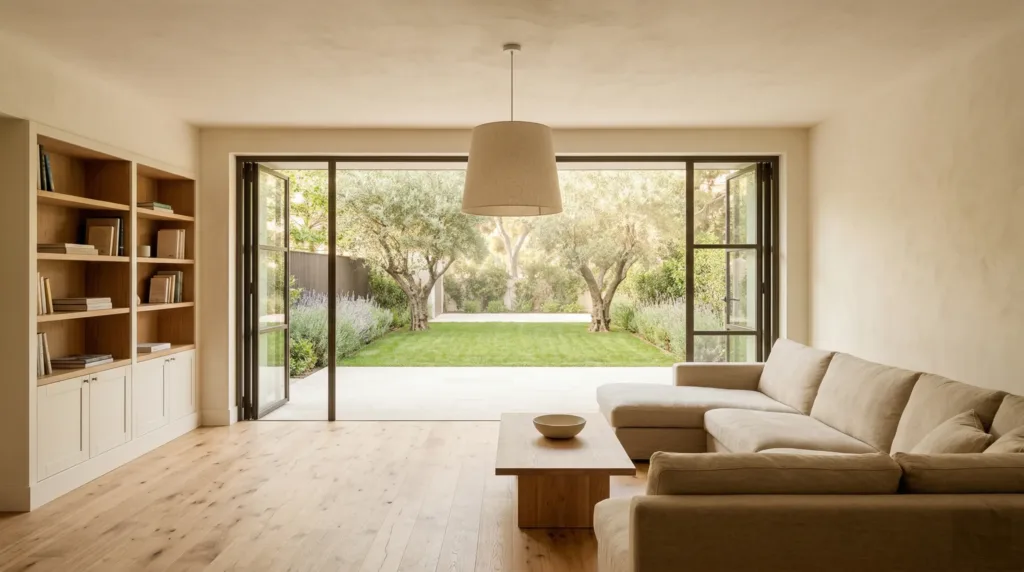
Each of the six apartments was renovated individually to a high specification while sharing a common material framework. Original ceiling heights across the upper floors range from 2.9 to 3.4 metres, with the first-floor apartment benefiting from the surviving vault structure and a ceiling height of 3.4 metres at the crown.
All apartments feature hydraulic mosaic tile flooring in the entrance and circulation areas, referencing the common-area restoration and reinforcing the building’s period character. Living areas and bedrooms are finished with wide-plank aged oak flooring in a natural oiled tone. Walls throughout are in smooth Venetian plaster, painted in warm off-white with a barely perceptible sheen.
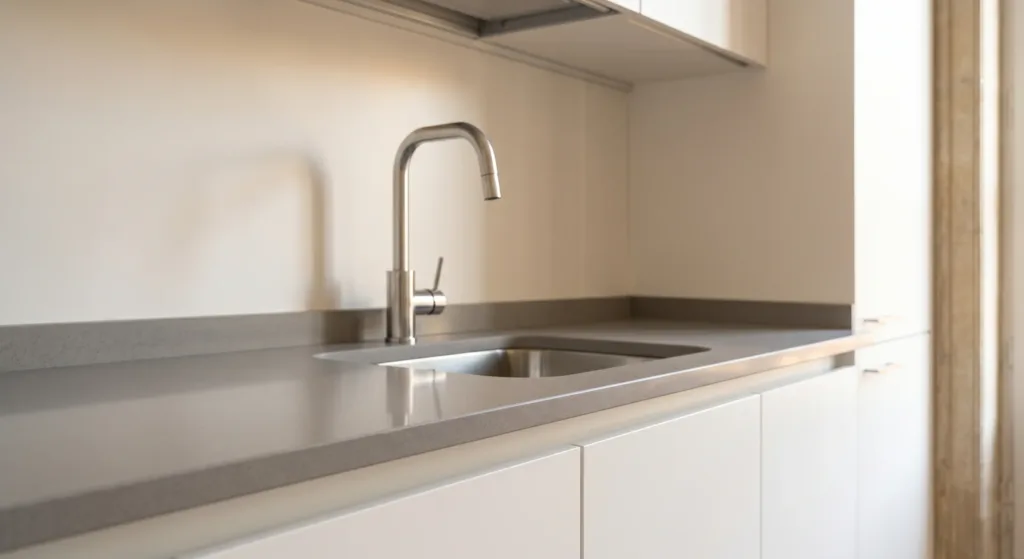
Kitchens are bespoke across all units. The design language varies slightly by apartment, ranging from painted sage cabinetry with brass hardware in the lower floors to white lacquered cabinetry with blackened steel fittings in the upper units. Every kitchen has a natural stone worktop: Calacatta marble in four units and honed Pietra Serena in two. Bathrooms use large-format stone-look porcelain in warm bone white, with wall-hung vanities in painted or oak-veneered cabinetry and period-referencing tapware in brushed brass or satin chrome.
The first-floor apartment, with its vaulted ceiling and direct access to the light well, was treated as the prestige unit. The vault was stripped and limewashed in a warm white. A steel and glass panel separating the living room from the kitchen allows the vault to read as a continuous architectural element across both spaces.
Façade
The street façade was cleaned, repointed, and repaired. Damaged render was replaced in lime mortar matching the original composition. Original timber shutters were restored on the first and second floors and replicated in treated hardwood on the upper floors. The result is a building that reads as genuinely restored rather than cosmetically refreshed — a meaningful distinction in a neighbourhood where heritage character drives long-term asset value.
Project Impact
This building renovation in El Born represents the most technically demanding heritage project in Lirian’s portfolio. It demonstrates the capacity to manage a multi-year, multi-permit, multi-disciplinary process without sacrificing quality of execution or fidelity to the building’s original identity. The result is a building that has recovered its architectural dignity, gained all the comfort and performance of a new construction, and will hold its value in one of Barcelona’s most consistently desirable locations.