Every week we speak with investors who arrive in Barcelona with a spreadsheet built on assumptions from other European markets. The numbers look right until they don’t — usually around the time the notary bill arrives.
This post breaks down the real cost of entry, realistic yield expectations, and which districts offer the best margin for value-add renovation strategies in 2025.
The True Cost of Buying in Barcelona
Purchase price is only the starting point. On a typical resale apartment you should budget:
- 10% ITP (Impuesto de Transmisiones Patrimoniales) — the property transfer tax for second-hand properties
- 1–1.5% notary and registry fees
- 1–2% legal and due diligence costs if you work with a property lawyer (non-negotiable for non-residents)
On a €400,000 apartment that means roughly €50,000–55,000 in acquisition costs before you pick up a paintbrush. Factor this into your yield calculations from day one.
Renovation as a Value Driver
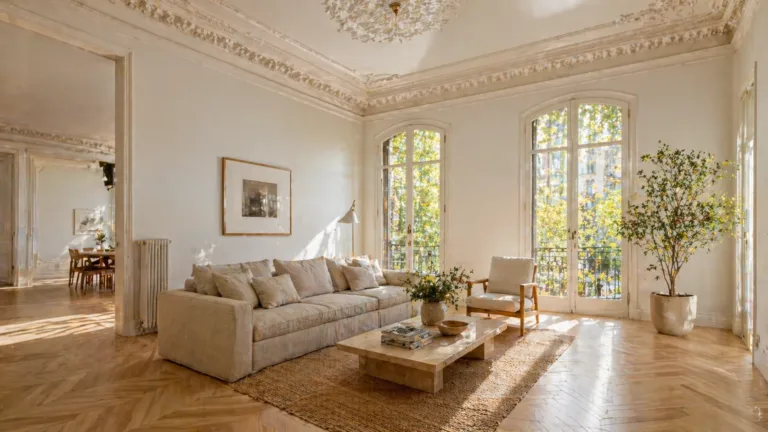
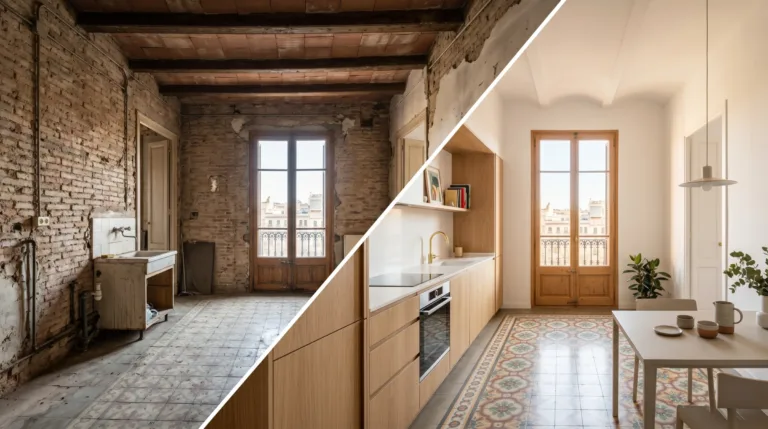
Barcelona’s rental market rewards finish quality. A well-renovated apartment in Eixample or Sarrià can command 30–40% more rent per square metre than an unrenovated equivalent in the same building.
The key word is well-renovated. Investors who cut corners on materials or skip proper permits typically see one of two outcomes: lower rents than projected, or costly remediation work when they eventually sell.
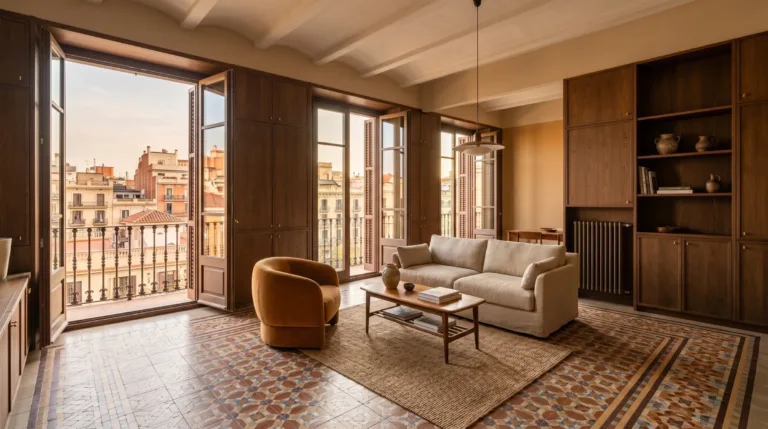
A full renovation in Barcelona currently runs between €850 and €1,450 per m² depending on finish level and structural complexity. Premium finishes (stone countertops, engineered wood flooring, custom joinery) sit at the upper end — but they are what the Airbnb-permitted short-let and high-end long-term markets demand.
District-by-District Snapshot
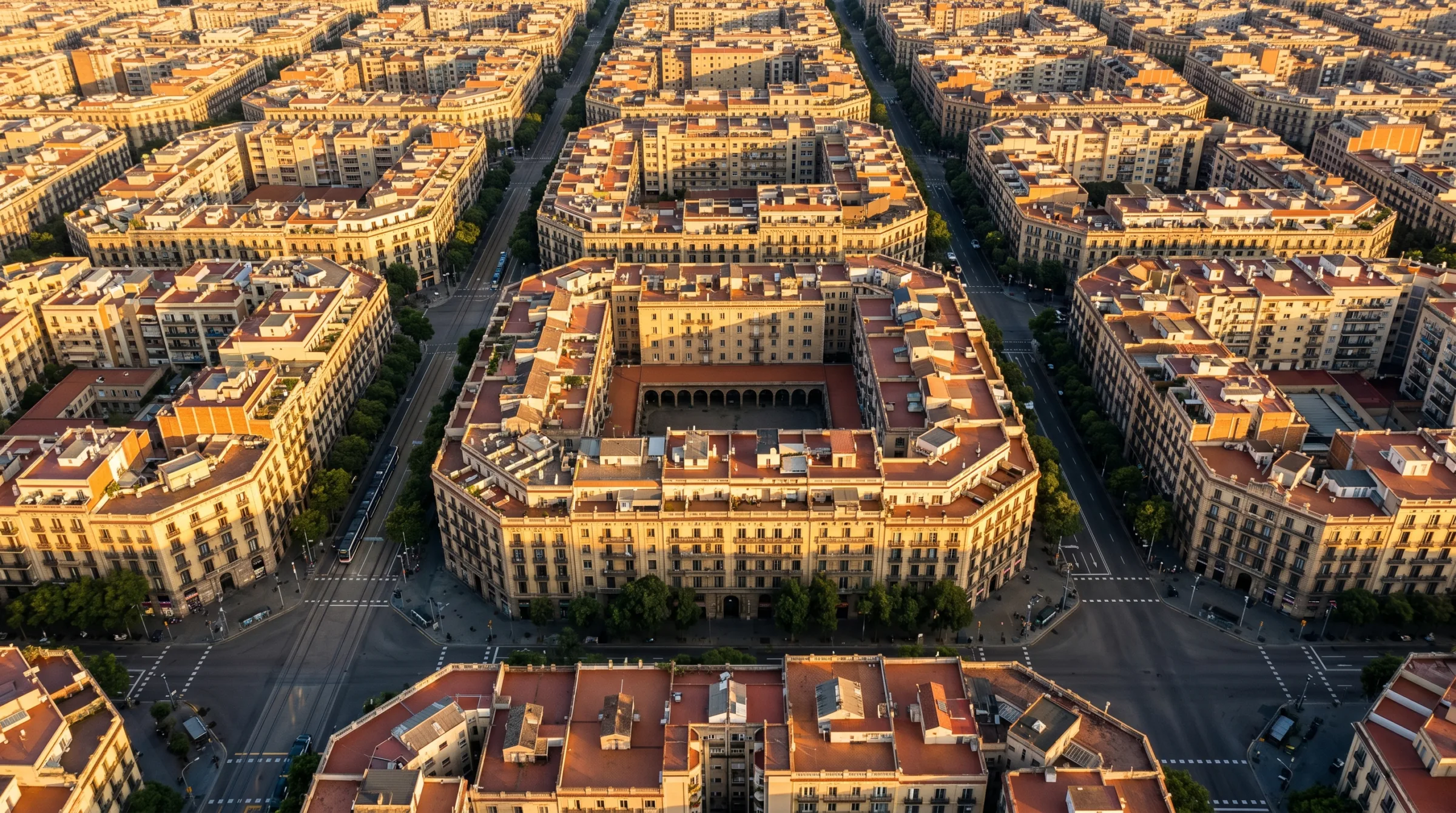
Eixample remains the benchmark. Prices of €5,500–7,500/m² for renovated stock, with long-term rental yields of 3.5–4.5%. The attraction is liquidity — it is the easiest district to exit when the time comes.
Gràcia offers slightly lower entry prices (€4,800–6,200/m²) with a younger, design-conscious tenant base. Boutique renovations with character — exposed brick, original hydraulic tiles — perform particularly well here.
Sarrià–Sant Gervasi is where capital preservation takes priority over yield. Buyers here are typically protecting wealth rather than maximising cash flow. Renovation budgets are higher, tenant expectations are higher, and the market is thinner — but voids are rare.
Sant Martí (particularly Poblenou and El Clot) is the value-add district of the moment. Entry prices are still 20–30% below Eixample, infrastructure investment continues, and the creative/tech tenant base is growing. Higher renovation risk, higher upside.
What Yields Can You Realistically Expect?
Gross yield on a fully renovated Barcelona apartment is typically 4–5.5% for long-term residential lets. Net yield after community fees, IBI (local property tax), insurance, and a modest management allowance sits at 3–4%.
If you are underwriting on 6%+ net, you are either in a peripheral location, taking on significant vacancy risk, or your renovation budget is too low to sustain that rent level.
Short-term lets (where licences exist) can push gross yields to 6–8%, but the regulatory environment remains uncertain and licence transfers are increasingly complex.
The Renovation ROI Calculation
A rough rule of thumb we use with clients:
Every €1 spent on a quality renovation in a prime district should return €1.50–2.00 in increased property value, plus a sustained rent premium of 25–40%.
This only holds when the renovation is properly permitted, uses durable materials, and is executed without defects that require future remediation. A poorly managed renovation that overruns by 20% and takes 6 months longer than planned destroys the ROI calculation entirely.
Key Questions to Ask Before You Buy
- Does the apartment have a cédula de habitabilidad? Without it, you cannot legally rent the property.
- What is the ITE status of the building? Older buildings due for a technical inspection can face mandatory common-area works — costs shared by all owners.
- Are there existing debts on the community of owners? These transfer with the property.
- What is the rental history? If the current owner cannot demonstrate a clean rental record, find out why.
- What permits will your renovation require? A change of use, structural modifications, or bathroom/kitchen relocations all require a obra mayor permit from the Ajuntament. Budget 3–4 months for approval.
Investing in Barcelona renovation projects requires more groundwork than most markets — but for investors who do it properly, the combination of capital appreciation, rental demand, and lifestyle optionality is genuinely compelling.
If you would like a fixed-price renovation estimate for a property you are considering, use our calculator or contact us directly.